







Securing roofs in the tractor and off-highway vehicle industry
Solutions:
Libera Lifeline – Trilob Lifeline –
AP36 Anchor Point – SK-21 Guardrail – Vertical X 2.0 Lifeline
Lifelines, guardrails, and safe access for complex industrial roofs
The project involved an Italian industrial plant that has been active for over 90 years in the design and production of tractors, transmission systems, and components for off-highway vehicles. A company that operates internationally, with technologically advanced plants, high quality standards, and complex production processes.
Inside the plant, routine and special maintenance activities required access and movement at height across large and structurally heterogeneous surfaces.
The objective? To increase the level of safety through durable, high-performance fall arrest systems that are perfectly integrated with the different types of roofing present in the plant.
Main issues
Solutions adopted
- Landing from ladder to roof
- Direct exposure to the risk of accidental falls
- Presence of roofs with different configurations
- Installation of Type C anchorage devices
- Collective protection devices
- Integration of guided type vertical fall arrest systems
Critical safety issues identified
The preliminary analysis conducted by the technical team during the site inspection revealed a situation with very large roofs, numerous systems, and frequent maintenance activities. Each area had its own characteristics, with different structural constraints that required a customized design for each zone.
The identified critical issues mainly concerned 3 aspects:
1. Structurally heterogeneous roofs
Presence of roofs with different configurations, including areas with corrugated sheet metal, technical zones dedicated to systems, and surfaces with photovoltaic panels.
Each operational area had different configurations of load-bearing capacity, geometry, access frequencies, and exposure to atmospheric agents. The design had to take each variable into account, defining specific solutions for each zone.
2. Exposed movements
Maintenance activities require continuous movement on the roofs for checks, verifications, and technical interventions. In the absence of protected pathways, operators are exposed to a high risk of falling.
3. Ladders and critical landing points
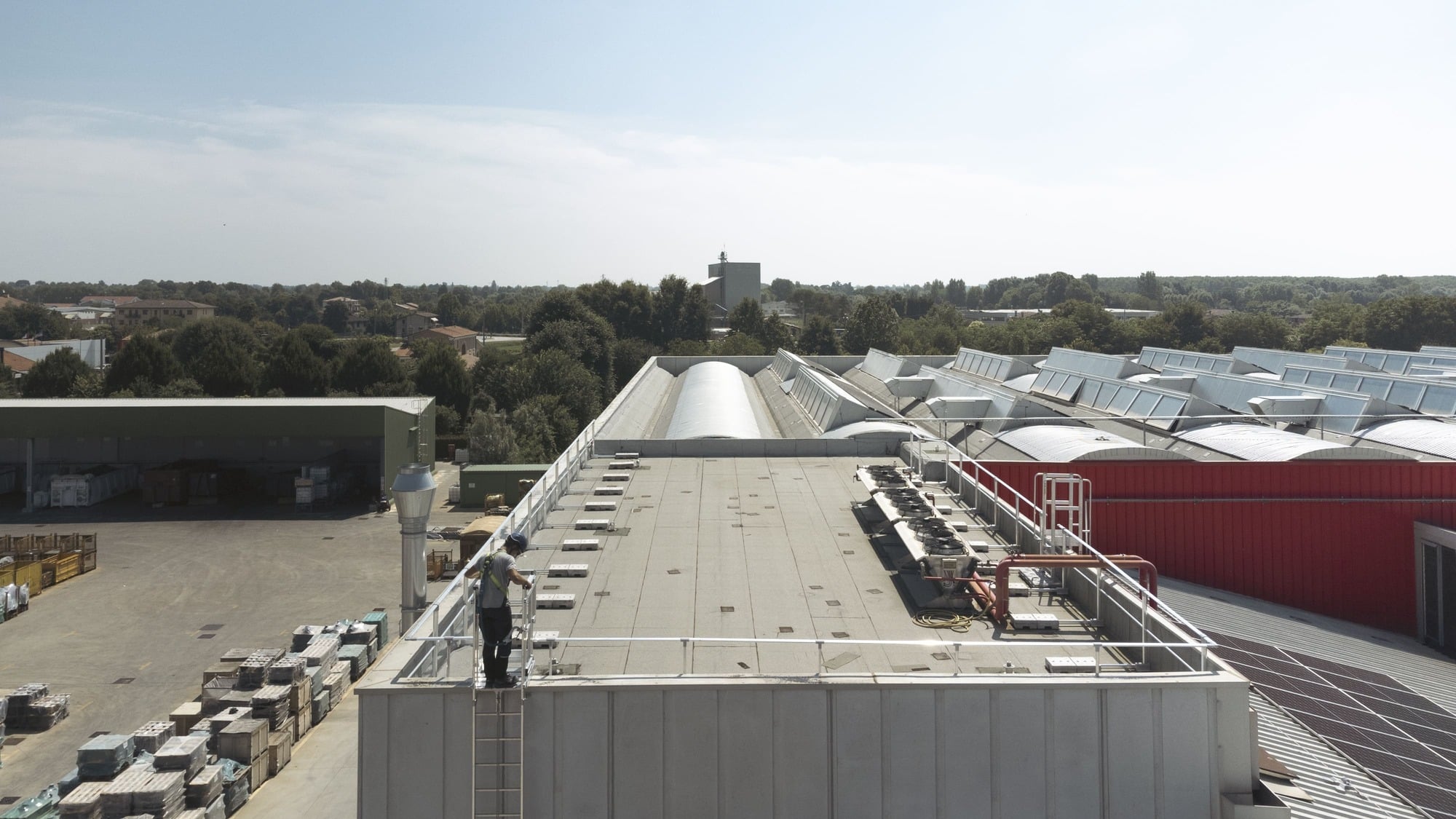
The fixed ladders provided access to the roofs but lacked fall arrest systems. The most critical moment was not only during ascent and descent phases but especially when landing from the last rung to the roof: a phase in which the operator changes position and, without a dedicated anchorage point, remains without protection.
CLICK AND REQUEST A CONSULTATION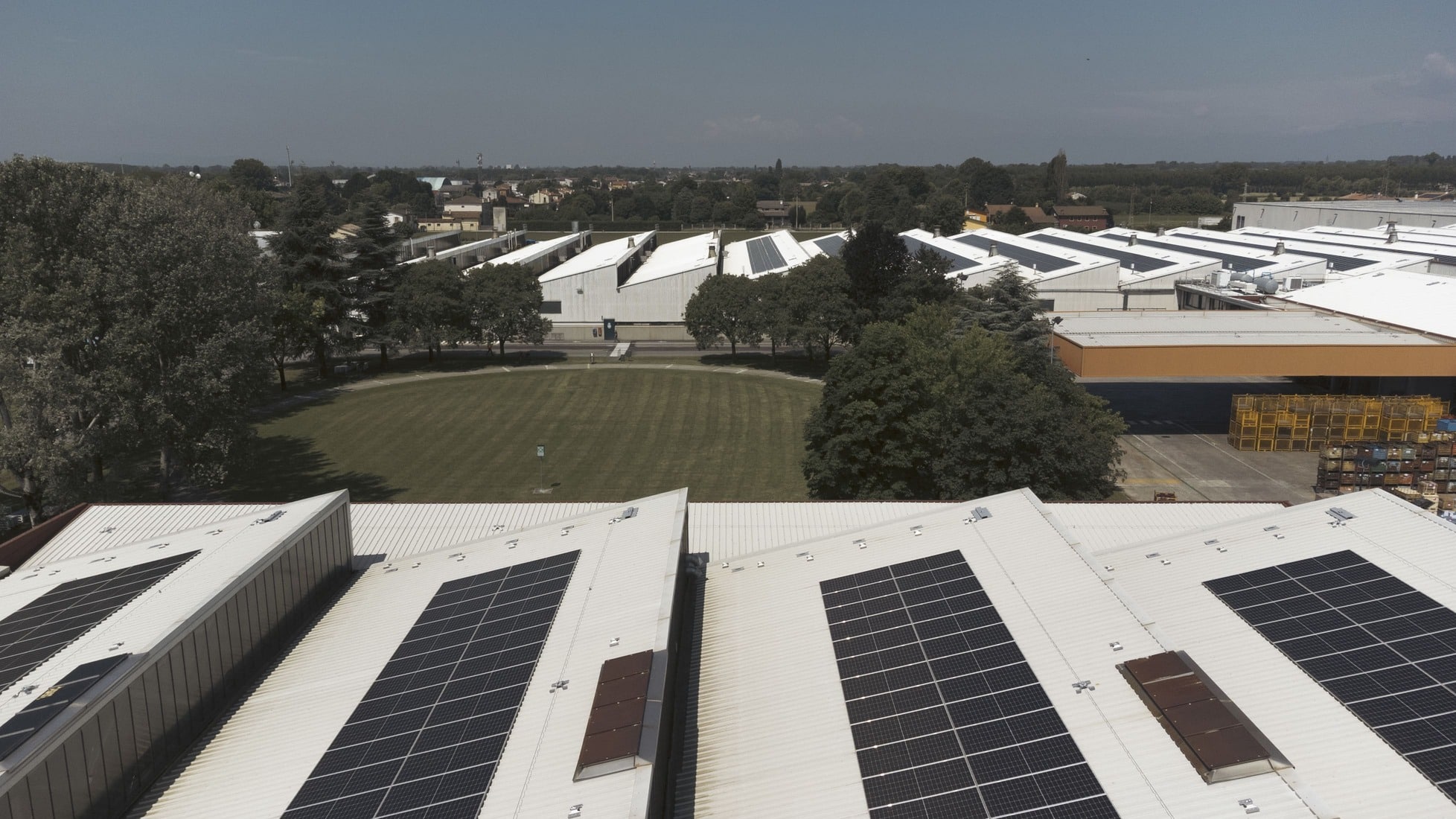
Installed solutions
Based on the critical issues that emerged, we developed a project for securing the industrial roofs, designed to meet the real operational needs of the plant.
Each solution was chosen based on the type of roof, the path to be protected, and the operators’ methods of use.
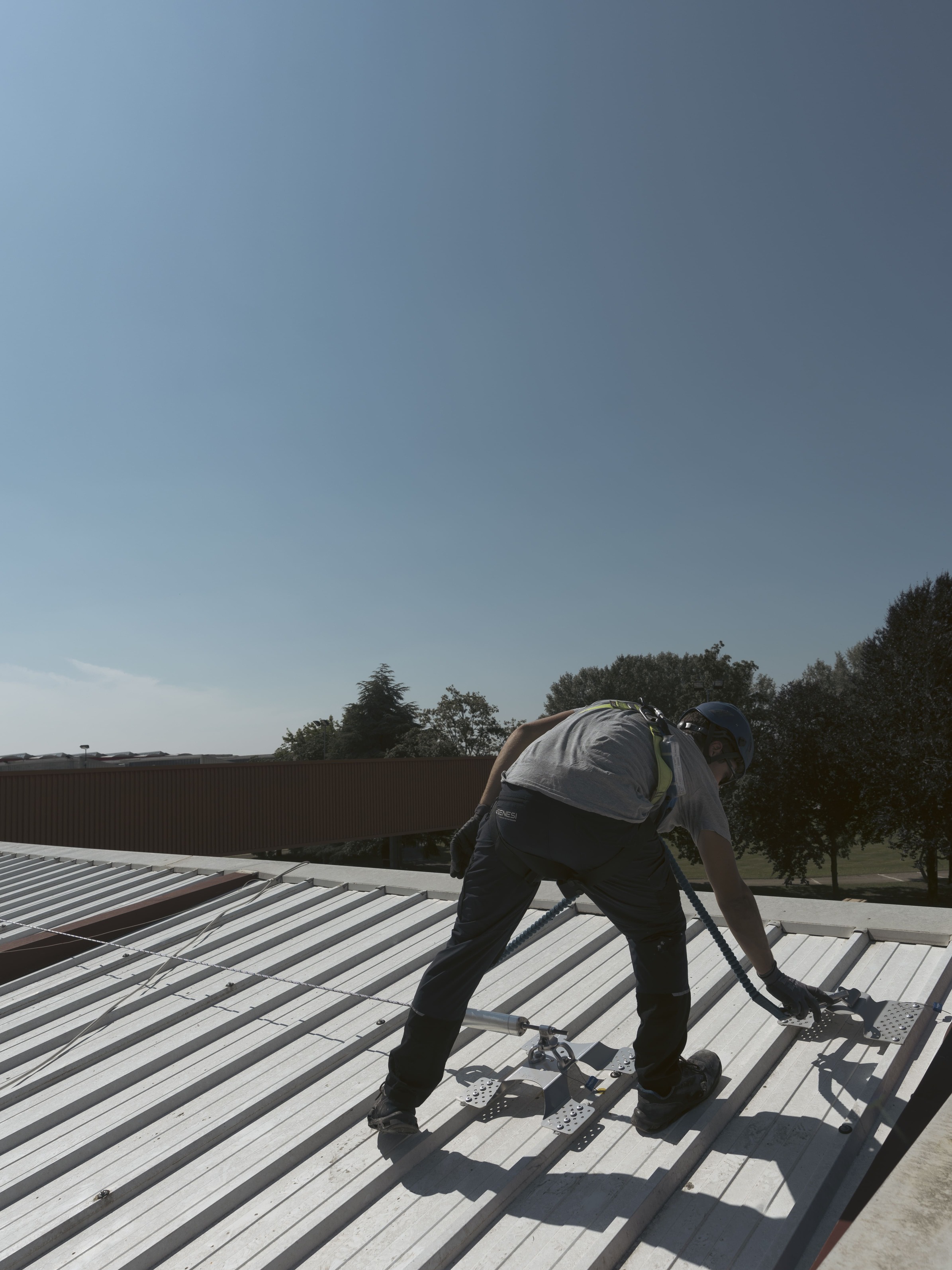
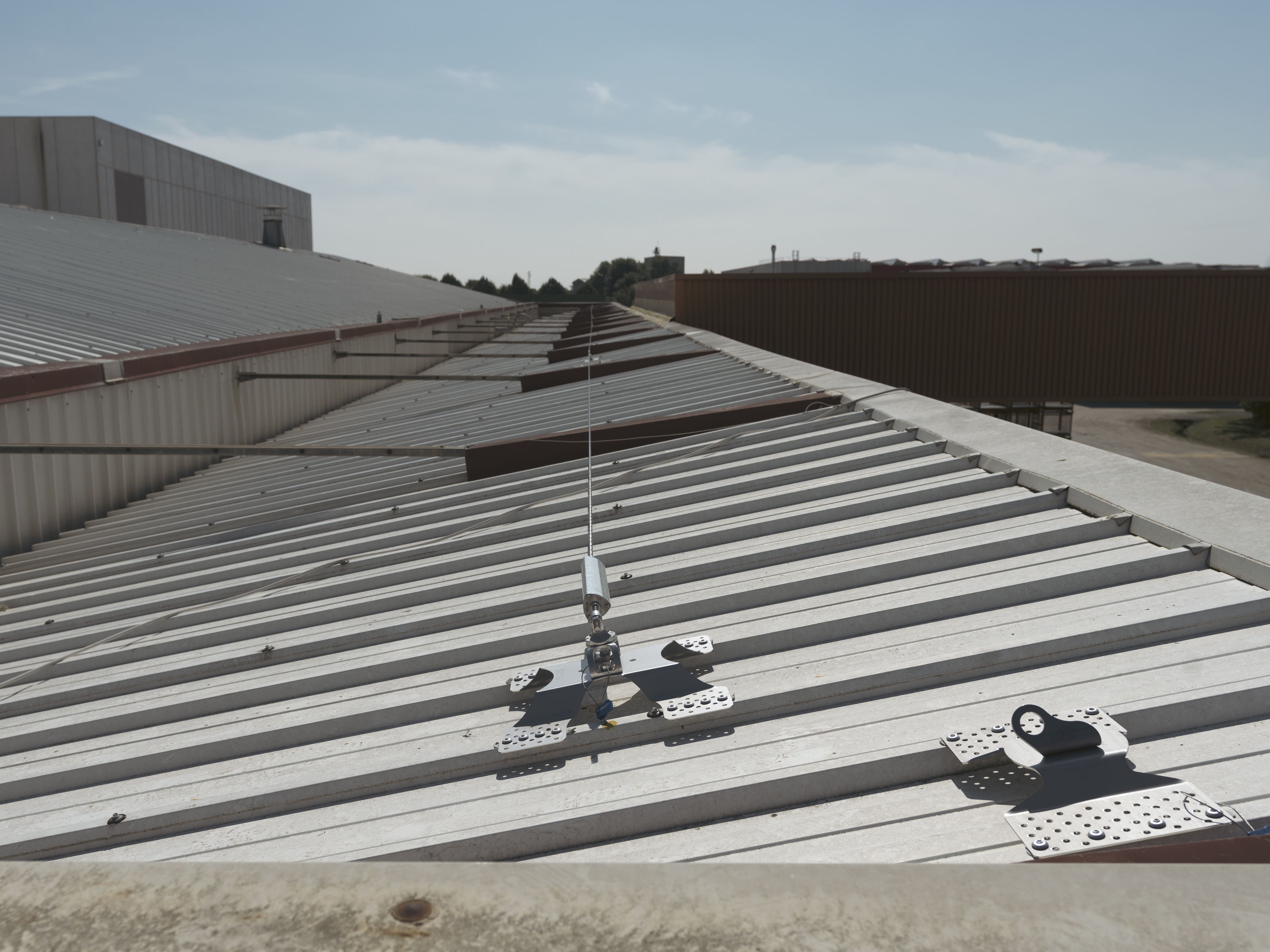
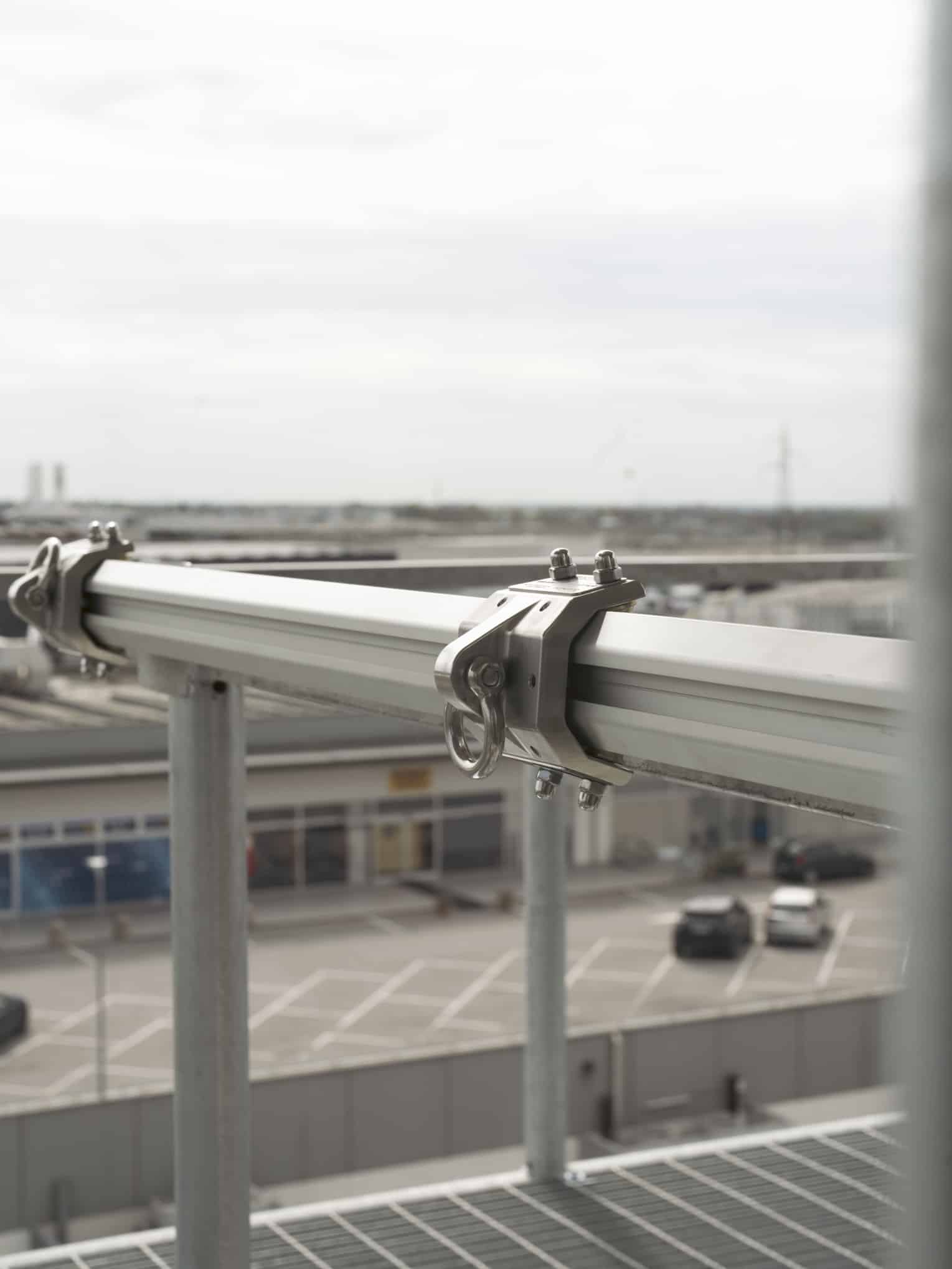
- Libera Lifeline
For the individual protection of operators, Libera horizontal lifelines were installed, compliant with EN 795:2012 Type C, CEN/TS 16415:2013 and UNI 11578:2015.
Made with die-cast aluminum alloy components, the Libera lifeline is distinguished by reduced load on the structure thanks to the lightness of its components, its ease of use for operators, and its resistance to atmospheric agents.
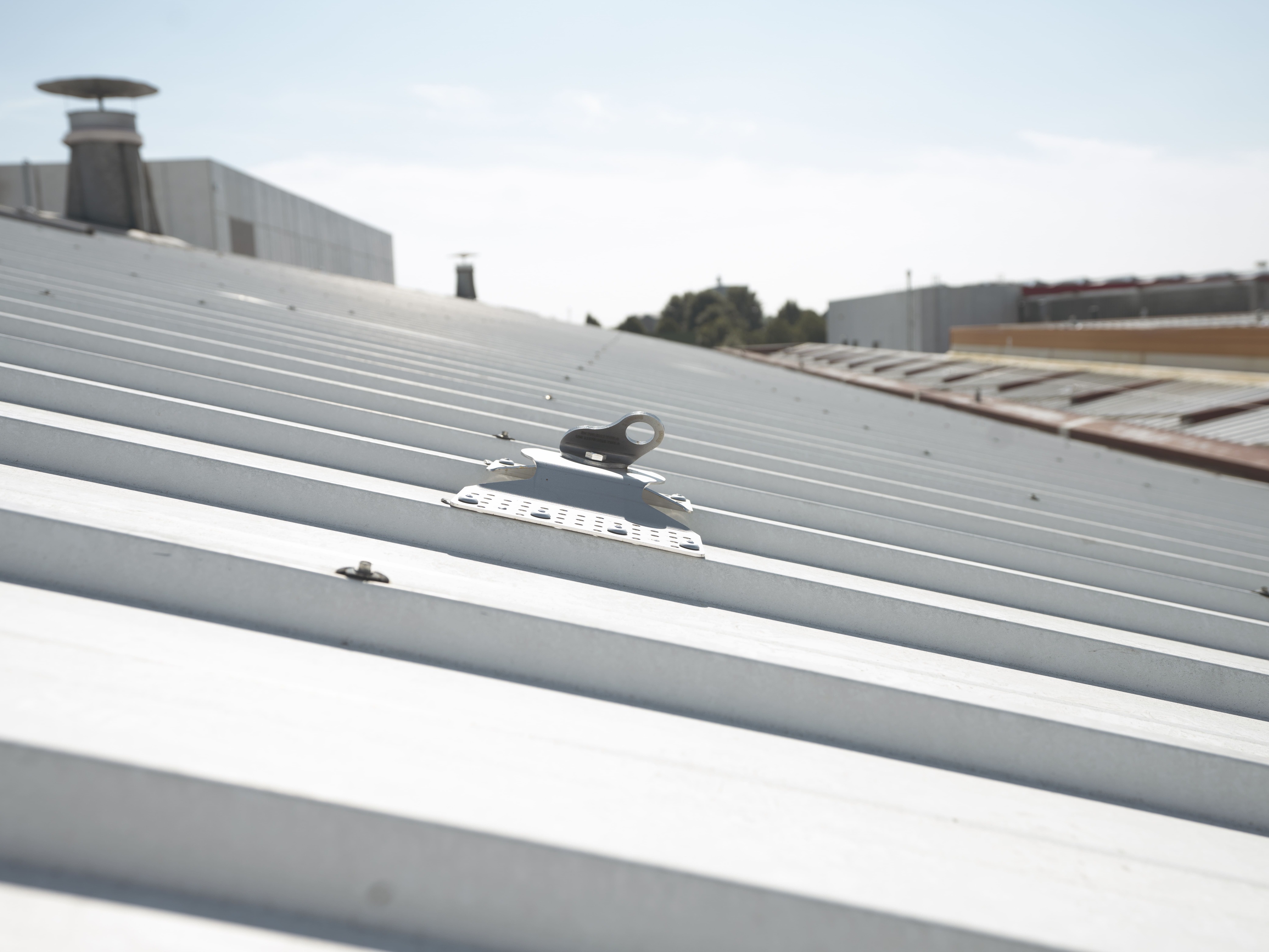
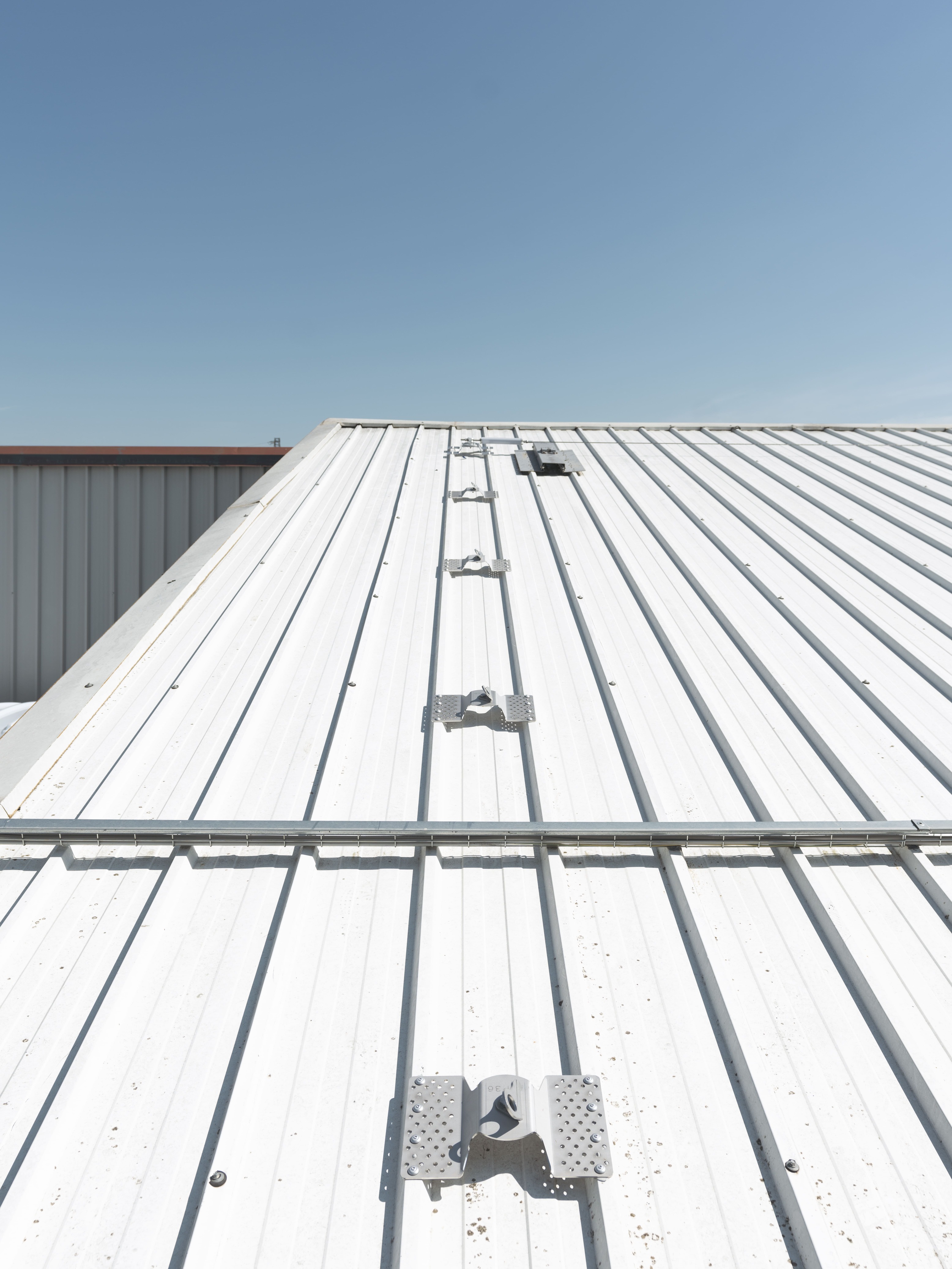
- AP36 Anchor points
To support the Libera lifelines, AP36 Type A anchorage points were integrated, compliant with EN 795:2012 Type A, UNI 11578:2015 and CEN/TS 16415:2013, to create a coordinated system that meets the structure’s needs.
- Trilob Lifeline
For areas with corrugated metal sheet roofs, Genesi Protection installed Trilob horizontal lifelines combined with PL23 plates.
A system compliant with EN 795:2012 Type C, CEN/TS 16415:2013 Type C and UNI 11578:2015, designed for the protection of up to 4 operators simultaneously.
This system was chosen for its ability to adapt perfectly to the structure’s roofs, dissipate the kinetic energy generated in the event of a fall, and reduce the stress on the operator and the roof.
The compact dimensions of the components and the minimal visual impact made it possible to integrate the fall arrest systems without altering the functionality of the industrial roofs.
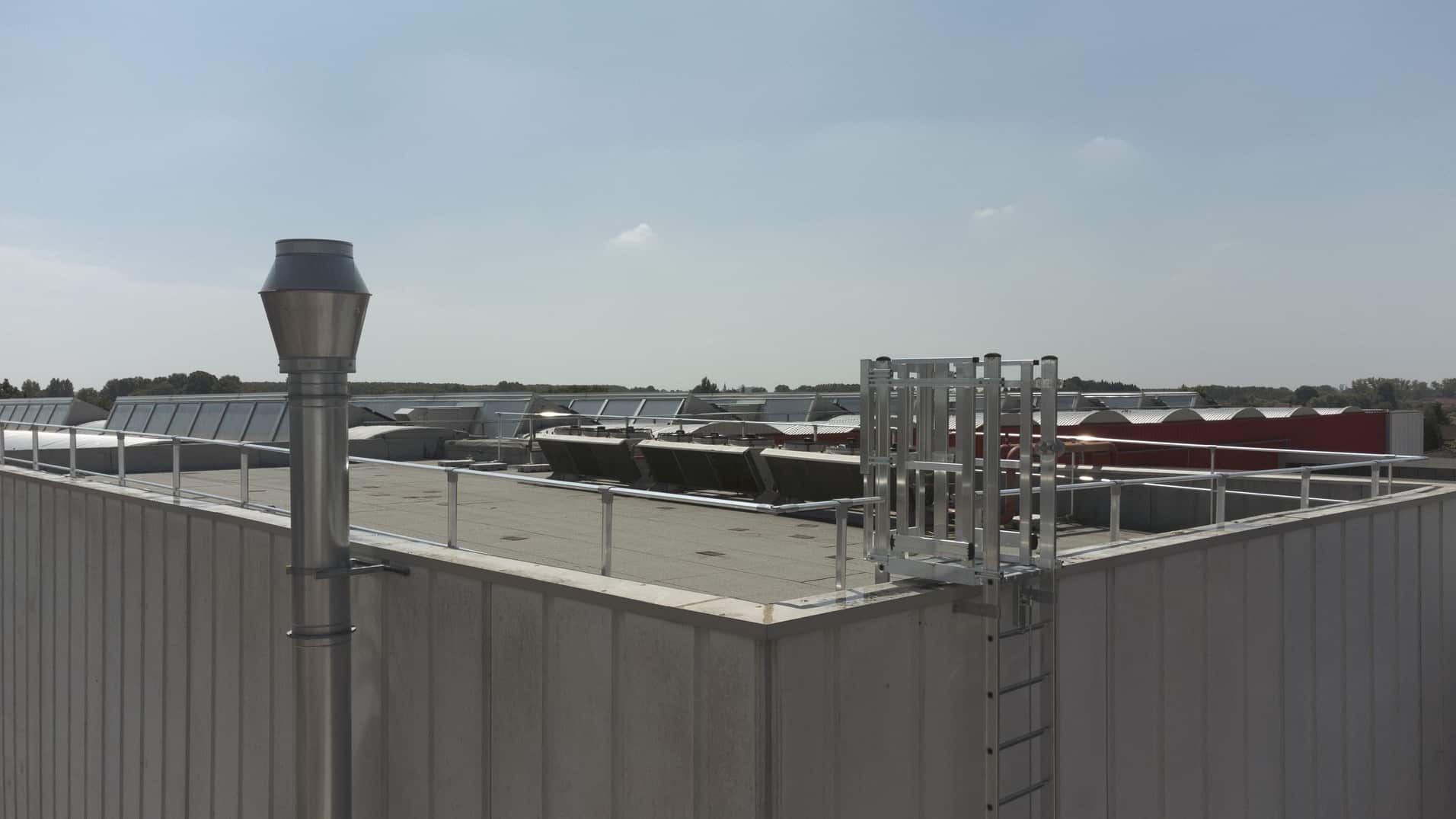
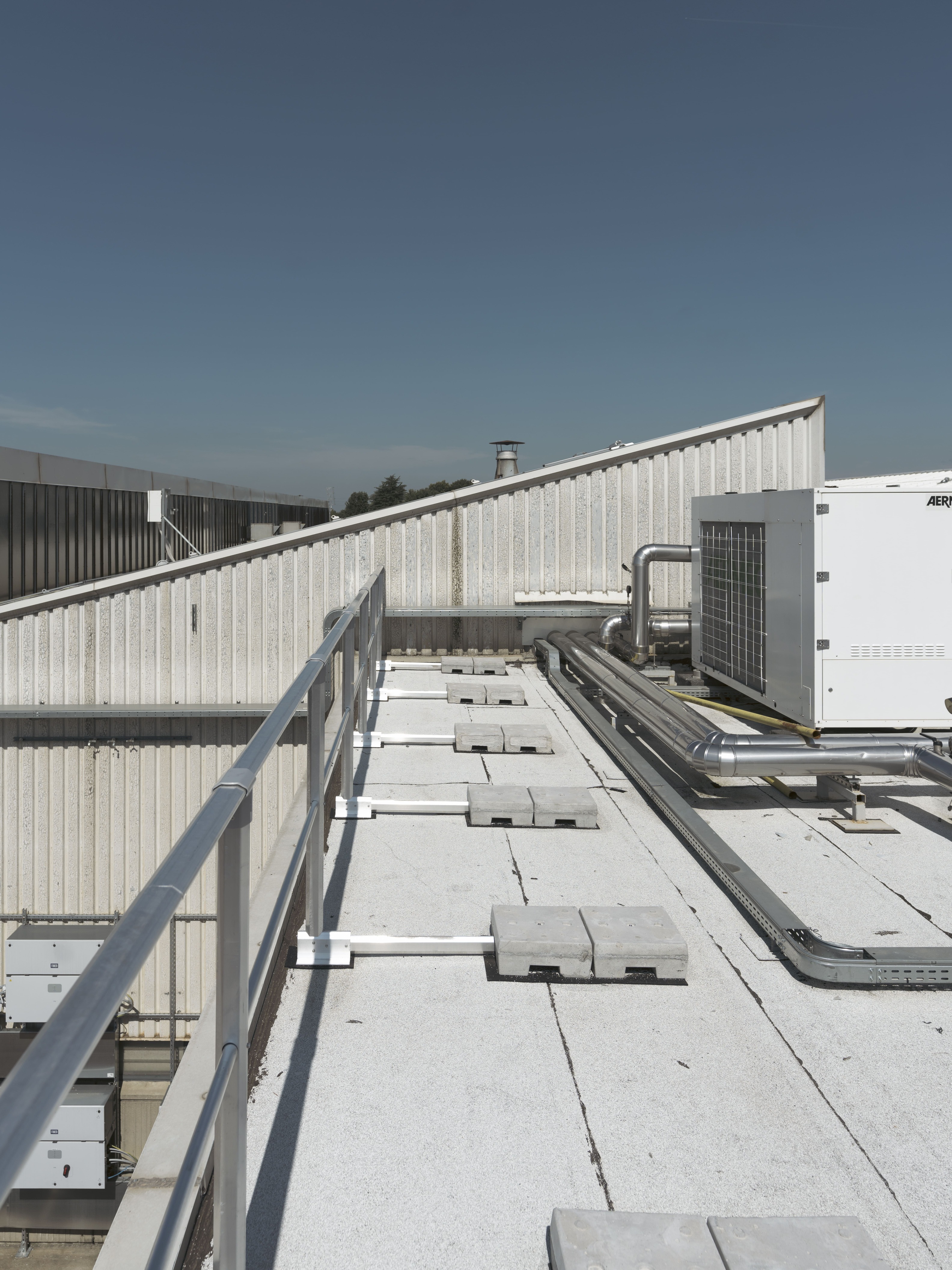
- SK-21 self-supporting Guardrails
To further increase the plant’s safety level, the project included the installation of SK-21 self-supporting straight guardrails (SKAD-21 configuration).
This collective protection measure does not require the use of Category III PPE and does not specify a maximum number of operators who can access the protected area simultaneously. This translates into greater safety and operational freedom for the workers. The guardrails were completed with toeboards.
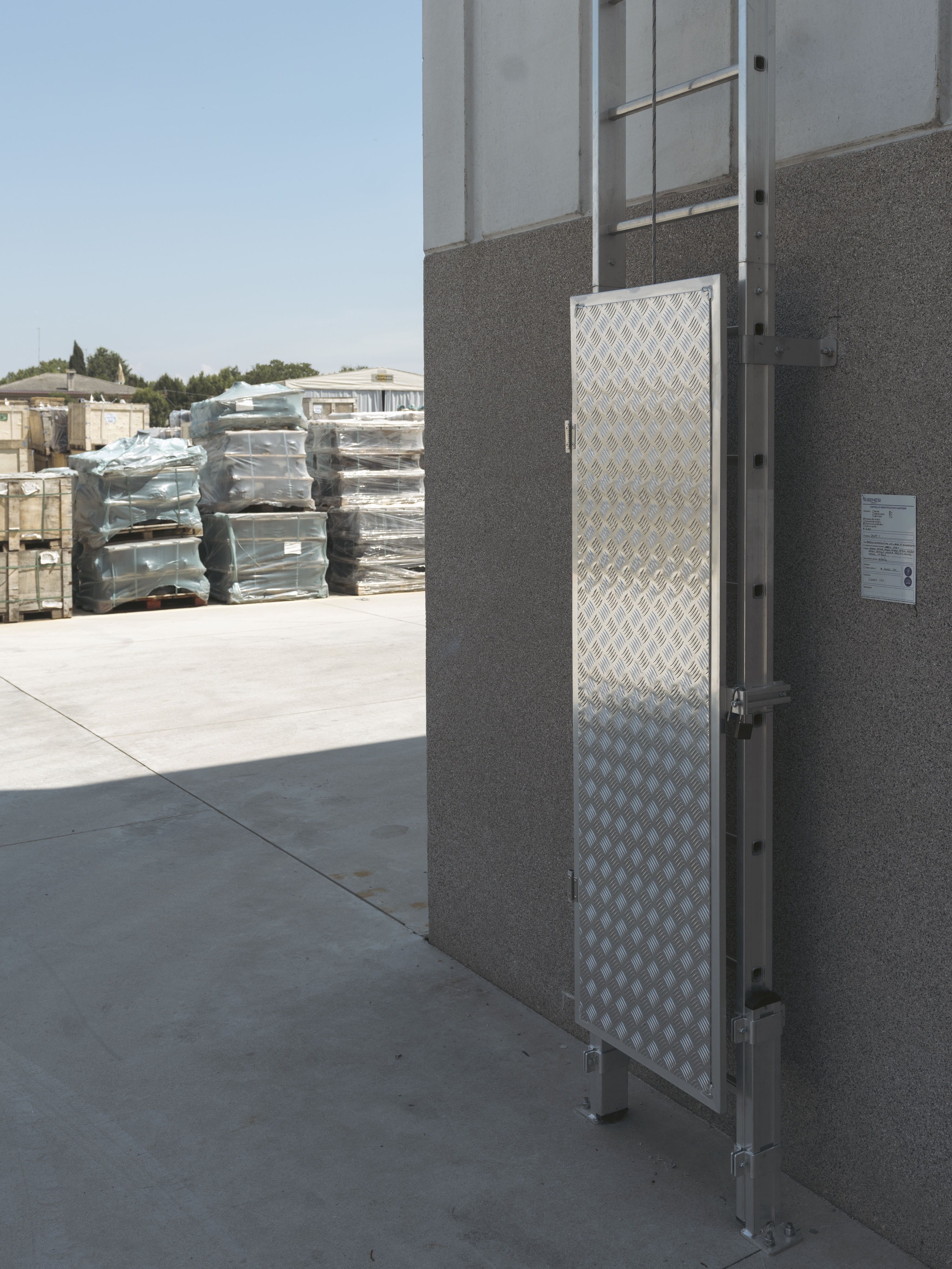
- Vertical X 2.0 Lifeline
The project also included securing the access ladders using the Genesi Vertical X 2.0 guided type vertical fall arrest system, compliant with EN 353‑1:2014+A1:2017, the PPE Regulation (EU) 2016/425, and RFU PPE-R/11.119 Version 1.
The system consists of:
- VEX001 shuttle – A guided type fall arrester, which follows the operator during ascent and descent, automatically stopping a fall in case of a slip.
- Anti-intrusion door – Prevents unauthorized access to the ladders and roofs, improving site security control and management.
A safe landing point with an ALU12 aluminum anchorage point has also been created, designed to ensure maximum protection for operators during roof access.
The results of the intervention
The plant now has a safe, compliant, and operationally efficient work-at-height environment.
- Operator safety: a significant increase in the level of protection.
- Fall arrest systems integrated into the structure: each area of the roof was treated with the most suitable system for the specific structure.
- Regulatory compliance: all installed systems comply with current technical standards.
Are your structures safe?
Securing industrial structures requires technical skills, knowledge of regulations, and solutions specific to each need. Genesi designs and manufactures the safety devices in-house and manages every phase of the process, from the site inspection to personnel training.
- Risk assessment – On-site inspection, risk identification, analysis of architectural constraints, and collection of necessary technical data.
- In-house production – Being the manufacturer means total control over quality and production times. We design and build every component in-house, ensuring the ability to adapt the system to the structure’s specifications.
- Installation – We manage the installation directly, carried out by qualified installers.
- Maintenance and inspection – Safety is a continuous process. For this reason, we ensure our safety devices are always compliant with regulations and perfectly efficient over time.
- On-site training and instruction – A system is only effective if used correctly. Our training service for your personnel on the safe use of devices and procedures for working at height ensures that safety becomes a daily and conscious practice.
Contact us for a technical consultation: we will analyze your structure and identify the most suitable fall arrest systems for your operational needs.
Click the button below now to request a free consultation.
CLICK AND REQUEST A CONSULTATION